Discovering shortest routes between Soviet railroad stations
History
*The reader must have familiarity with Max-Flow algorithms.
-
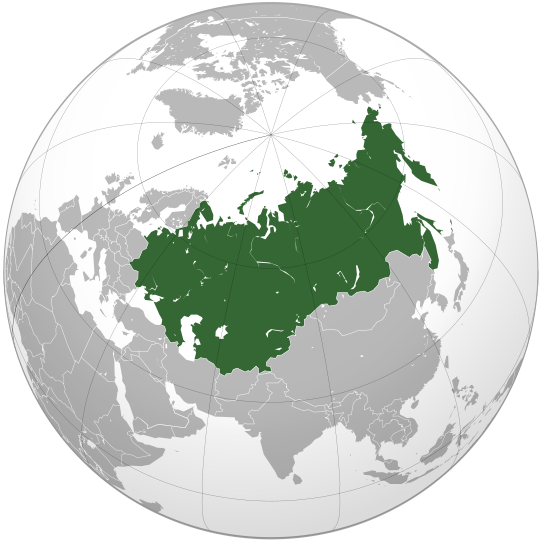
Max-Flow algorithms were used in the Soviet Union(the green region below) to determine the less cost effective way of carrying goods to Eastern Europian countries.
-
Carriage of 163000 tons would be done from the Soviet to the Eastern European countries; the paths might be observed in the following map:

-
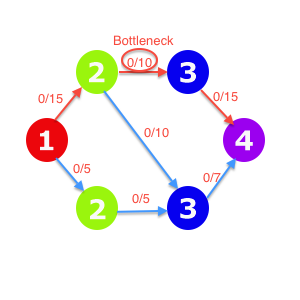
Min-Cut approach was used in order to determine where the US airplanes could intervene -- essentially the regions of train rails that has the maximum flow going through them. Such a region is outlined above by the encircled black region named as "The Bottleneck.".
-
Ford-Fulkerson -- in describing their algorithm -- references a report that was written for the US Air Force in 1955 for this purpose.
-
A different way of finding a maximum flow other than the algorithm developed by Ford and Fulkerson is called Dinic's algorithm:
-
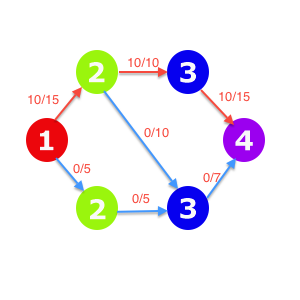
Essentially, build a level graph where there is at most one edge between each vertices.
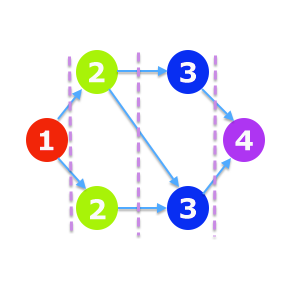
-
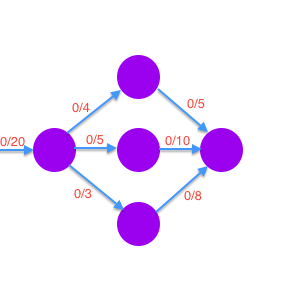
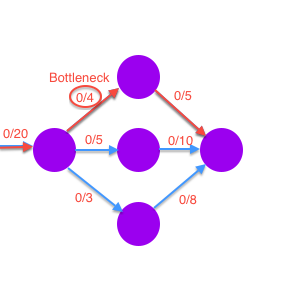
- Here is an example level graph with flow capacities:
-
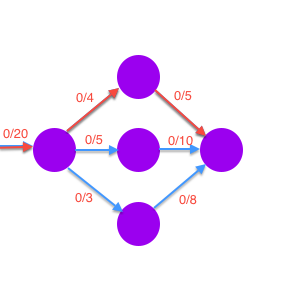
- Find an augmenting path:
-
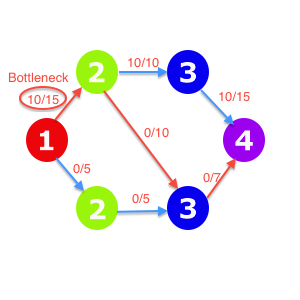
- Then find a bottleneck:
-
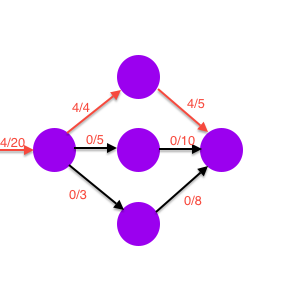
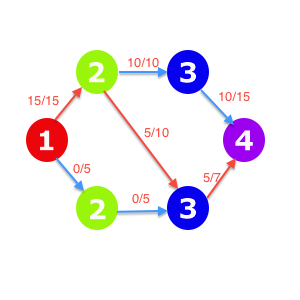
- Then, find an augmenting path from the bottleneck to the sink and increase the flow:
-
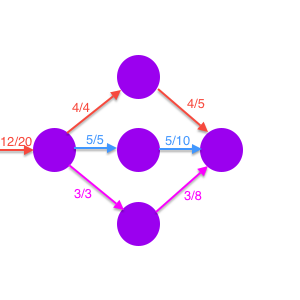
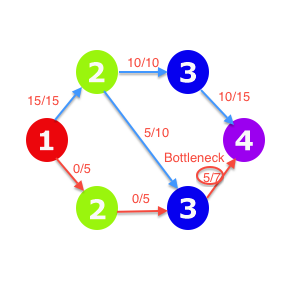
- Repeat the process for other vertices until no augmenting path could be found:
-
- An example with more nodes -- image order is left to right:
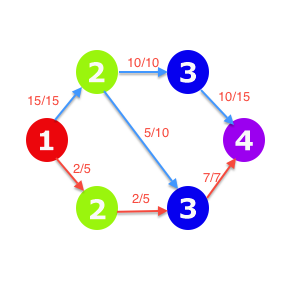
-
- Drawing a level graph would take O(E) time and constructing a blocking flow would take O(VE) time. The running time is O(VE^2).
-
* Chih-Hsuan Kuo's presentation is used as a reference.